A Practical Expat Guide to Speed Cameras and Traffic Fines in Saudi Arabia
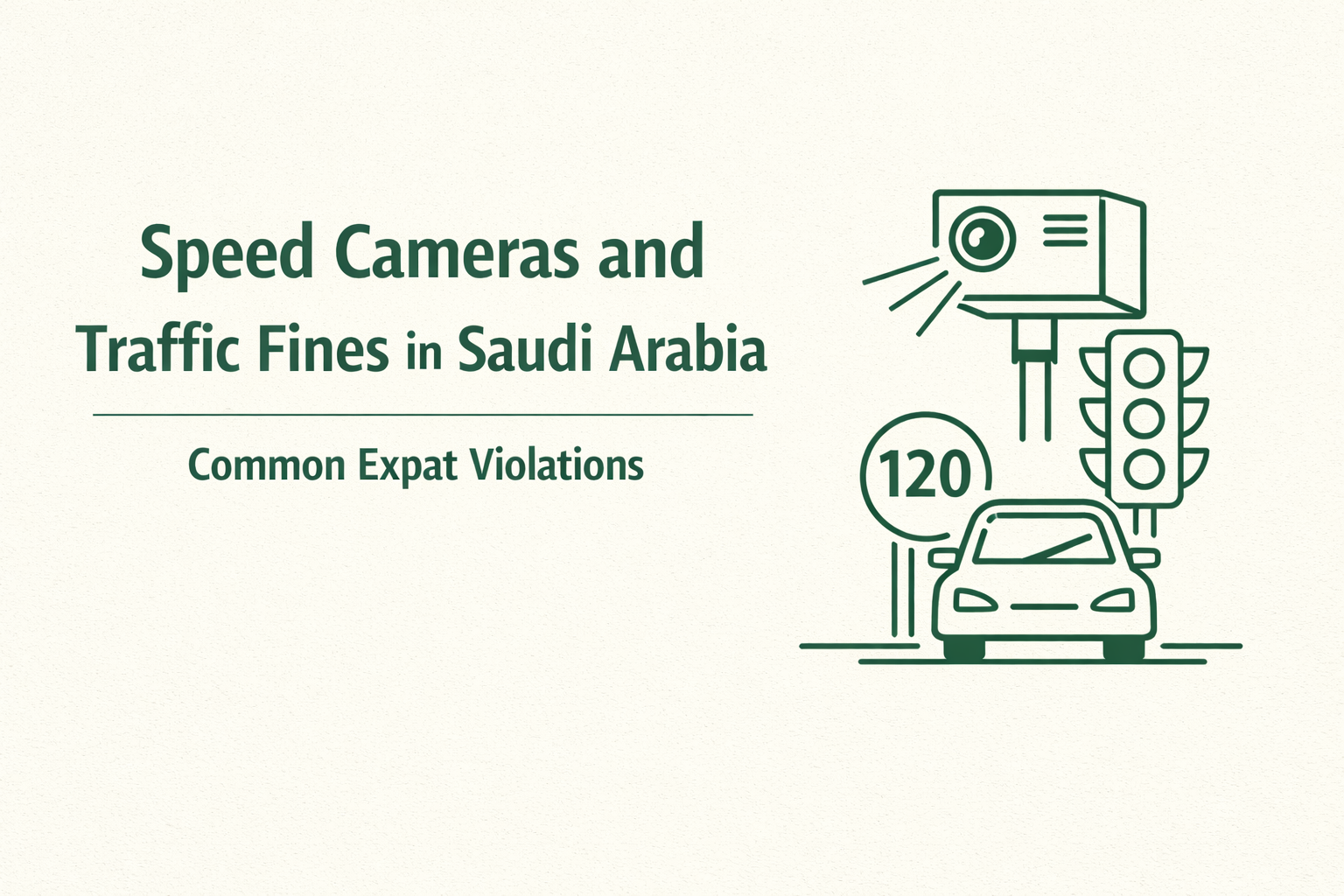
If you drive in the Kingdom, speed cameras and traffic fines in Saudi Arabia are something you’ll run into sooner or later. The system is highly automated, and many of the most common violations are caught instantly by cameras, not police stops.
This guide breaks down the most frequent fines expats get, how Saher cameras work, and how to check or pay violations properly so you avoid expensive surprises.
How speed cameras work in Saudi Arabia (Saher system)
Saudi Arabia’s main traffic enforcement network is called Saher. It uses automated cameras placed across cities and highways to detect violations without needing an officer on site.
These cameras commonly capture
- Speeding above posted limits
- Crossing red lights
- Using a mobile phone while driving
- Not wearing a seat belt
- Some lane discipline and dangerous driving behaviors
Because Saher is camera based, fines are usually issued directly to the vehicle owner’s Iqama linked record, even if someone else was driving.
To stay updated on driving rules and daily life tips in the Kingdom, you can also explore practical local guides on KSA Buddy .
Most common traffic fines expats face in Saudi Arabia
Here are the violations that expats most often deal with, especially in Riyadh, Jeddah, Dammam, and on highways between major cities.
Speeding fines
Speeding is the most common camera violation in Saudi Arabia.
Fines are not one fixed amount. They increase depending on how far above the limit you were driving. In 2026, speeding penalties are grouped into violation categories, and serious over speeding can become very costly. Instead of relying on one number, the safest way is to check the exact fine directly in Absher or Efaa before paying.
Red light violations
Running a red light is one of the most expensive everyday violations.
In 2026, the fine is commonly enforced in the SAR 3,000 to SAR 6,000 range depending on severity. This is one of the strictest camera monitored offenses in the Kingdom.
Mobile phone use while driving
Using a phone while driving is increasingly detected by automated systems.
Even quick actions like holding your phone at a signal can trigger a violation. This is one of the most common surprises for new drivers in Saudi Arabia.
Seat belt violations
Seat belt fines are also commonly camera detected.
Both the driver and front passenger are expected to buckle up, and enforcement is consistent in most major cities.
Parking and lane discipline fines
Expats often get fined for
- Parking in disabled spaces
- Blocking driveways or exits
- Stopping in no parking zones
- Sudden lane cutting or unsafe merging
These fines can vary depending on location and severity, so confirming in the official portal is always best.
How to check and pay traffic fines (Absher and Efaa)
Saudi Arabia makes it simple to check violations online.
Main official options include
Absher (Ministry of Interior)
Absher allows residents and citizens to inquire about traffic violations linked to their ID.
Efaa (National Violations Platform)
Efaa is a national platform run by the Saudi National Information Center and is widely used for violation lookup and payment.
For the most important official reference, you can use the Efaa platform directly through the national portal here Efaa National Violations Platform
Typical steps to check fines
- Log in to Absher or Efaa using your National ID or Iqama
- Go to Traffic Services or Violations
- View the violation details and amount
- Pay through the linked SADAD payment system or your bank app
Always confirm the violation details inside the portal before payment, since categories and amounts can update.
Tips to avoid surprise fines as an expat
- Follow posted speed limits closely, especially near camera zones
- Do not assume a “speed buffer” applies everywhere
- Stop fully at red lights, even late at night
- Never hold your phone while driving
- Make seat belts automatic for every passenger
- Check violations monthly if you drive often
- Keep your vehicle registration tied correctly to your Iqama