Fahas Vehicle Inspection in Saudi Arabia Process, Cost, Rules
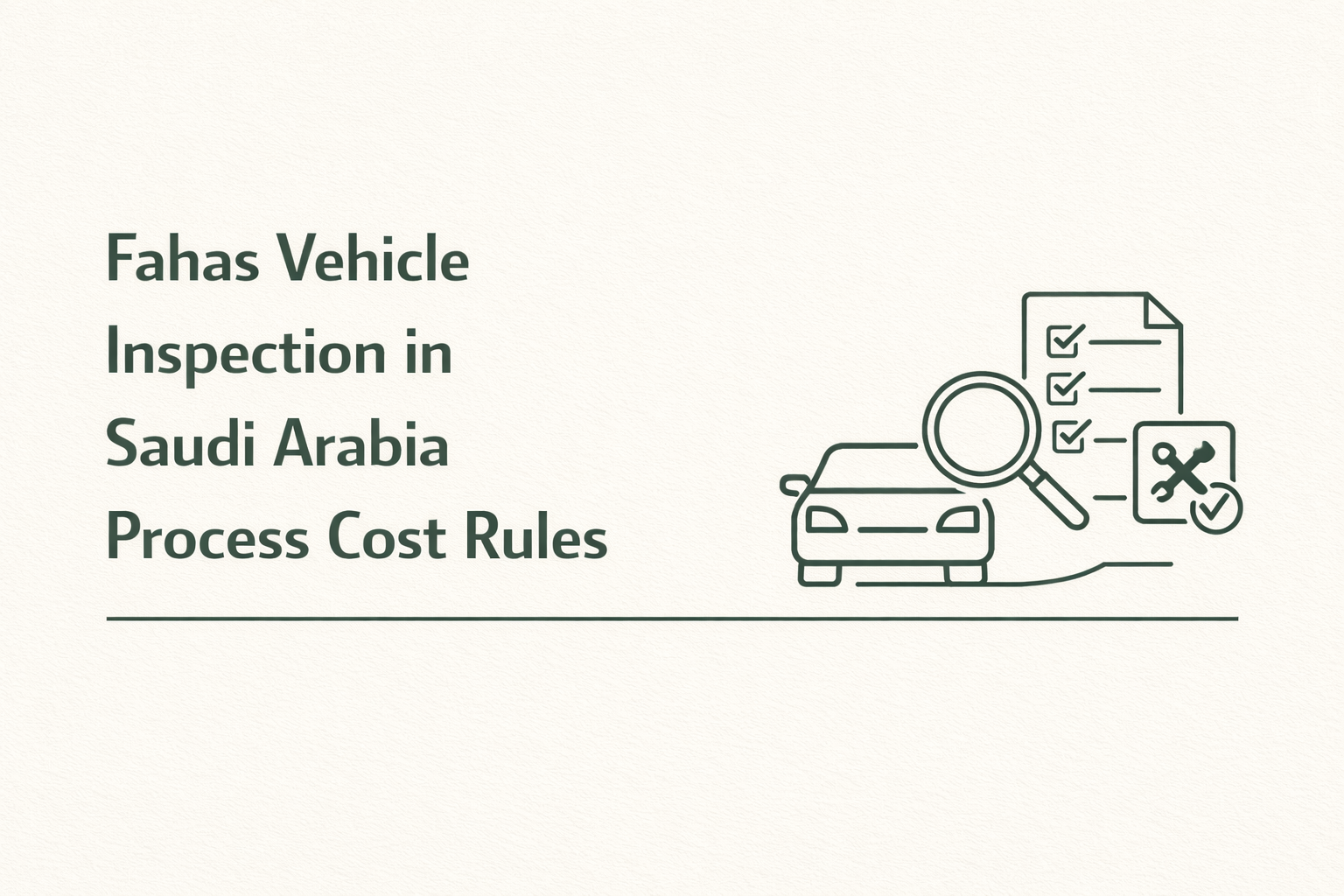
If you own a car in Saudi Arabia, understanding Fahas vehicle inspection in Saudi Arabia is essential for keeping your vehicle legally roadworthy. Fahas, also known as periodic vehicle inspection, is required at specific intervals and is directly tied to your ability to renew your vehicle registration.
This guide explains what Fahas is, when you need it, what happens during inspection, how much it costs, and what to expect if your car passes or fails. For a full overview of driving and vehicle ownership, see Driving in Saudi Arabia Complete Guide for Expats.
What Fahas means in Saudi Arabia
Fahas is the official vehicle inspection system in Saudi Arabia.
It checks whether your car meets basic safety and roadworthiness standards. The inspection is handled through authorized centers under the MVPI system.
In simple terms, Fahas is not optional.
It is part of maintaining your vehicle legally.
When Fahas is required
Fahas is not required immediately for brand new cars.
Typical rules are:
- private cars: first inspection after 3 years
- after that: yearly inspection
- commercial vehicles: earlier and more frequent inspection
You may also need Fahas in situations like:
- renewing vehicle registration
- transferring ownership in some cases
- reinspection after failure
The exact timing can vary depending on vehicle type, so always check your vehicle status if unsure.
Why Fahas matters for drivers
Fahas is not just a routine check.
It directly affects:
- your ability to renew Istimara
- your legal driving status
- your vehicle’s safety condition
Without a valid inspection, you may not be able to complete important vehicle related services.
This is why Fahas should be treated as part of regular car maintenance, not a last minute task.
Fahas vehicle inspection in Saudi Arabia process
The process is simple once you understand the flow.
Before you go
Before heading to a Fahas center, make sure
- your car is in reasonable condition
- lights and signals are working
- tires are safe
- there are no obvious issues
You also need a valid booking in most cases.
For the exact steps, see How to Book a Fahas (MVPI) Appointment in Saudi Arabia.
What happens at the inspection center
At the Fahas center, your vehicle goes through a structured inspection.
This usually includes checks on:
- brakes
- lights
- suspension
- tires
- emissions
- structural condition
The process is handled by inspection staff using equipment and visual checks.
You typically stay in or near the vehicle while it moves through inspection lanes.
What happens after the inspection
Once the inspection is complete, you receive the result.
There are only two outcomes:
- pass
- fail
The result is recorded in the system and linked to your vehicle records.
What Fahas checks during inspection
Fahas focuses on safety and roadworthiness.
At a high level, it checks:
- braking performance
- steering condition
- lighting systems
- tires and alignment
- emissions
- chassis integrity
It is not a full mechanical service, but it is strict enough to catch issues that affect safe driving.
For a full breakdown of common failures, see MVPI Fahas Fail Items Explained Common Reasons You Fail and Fast Fixes That Pass.
Fahas cost in Saudi Arabia
Fahas fees depend on vehicle type.
For most private cars, the inspection cost is commonly around the standard light vehicle fee range.
Heavier or commercial vehicles may have higher fees.
Because fees can vary slightly by category or updates, it is best to confirm at the time of booking or at the inspection center.
What happens if your car passes
If your car passes:
- your inspection is marked as valid
- your vehicle becomes eligible for next steps like registration renewal
- you do not need to return until the next required inspection period
A pass result means your car meets the minimum safety requirements at the time of inspection.
What happens if your car fails
If your car fails:
- you will receive a report with issues
- you must fix the problems
- you will need to return for a retest
Failure is common and not a major issue if handled properly.
For the exact retest process and time limits, see Failed Fahas? Retest Time Limit and Rebooking Steps in KSA.
How Fahas connects to Istimara renewal
Fahas is directly linked to your vehicle registration.
To renew your Istimara, your car must usually have:
- valid inspection
- valid insurance
- no blocking issues
This makes Fahas one of the key steps in the renewal process.
For full steps, see Renew Vehicle Registration Istimara in Saudi Arabia Steps, Fees, Requirements.
Common mistakes people make with Fahas
These are the most common issues drivers face:
Going without basic preparation
Small problems like lights or tires can cause failure.
Waiting until the last moment
This creates pressure if the car fails and needs repair.
Ignoring failure reports
The report tells you exactly what needs fixing.
Not understanding retest timing
Missing the retest window can delay your process.
Treating Fahas as a formality
It is a real safety check, not just a box to tick.
Final advice before your inspection
If you want a simple approach:
- check your car basics before going
- book early
- expect either pass or fix and return
- do not rush the process
Fahas is predictable once you understand it.
And when handled properly, it becomes just another routine part of owning a car in Saudi Arabia.