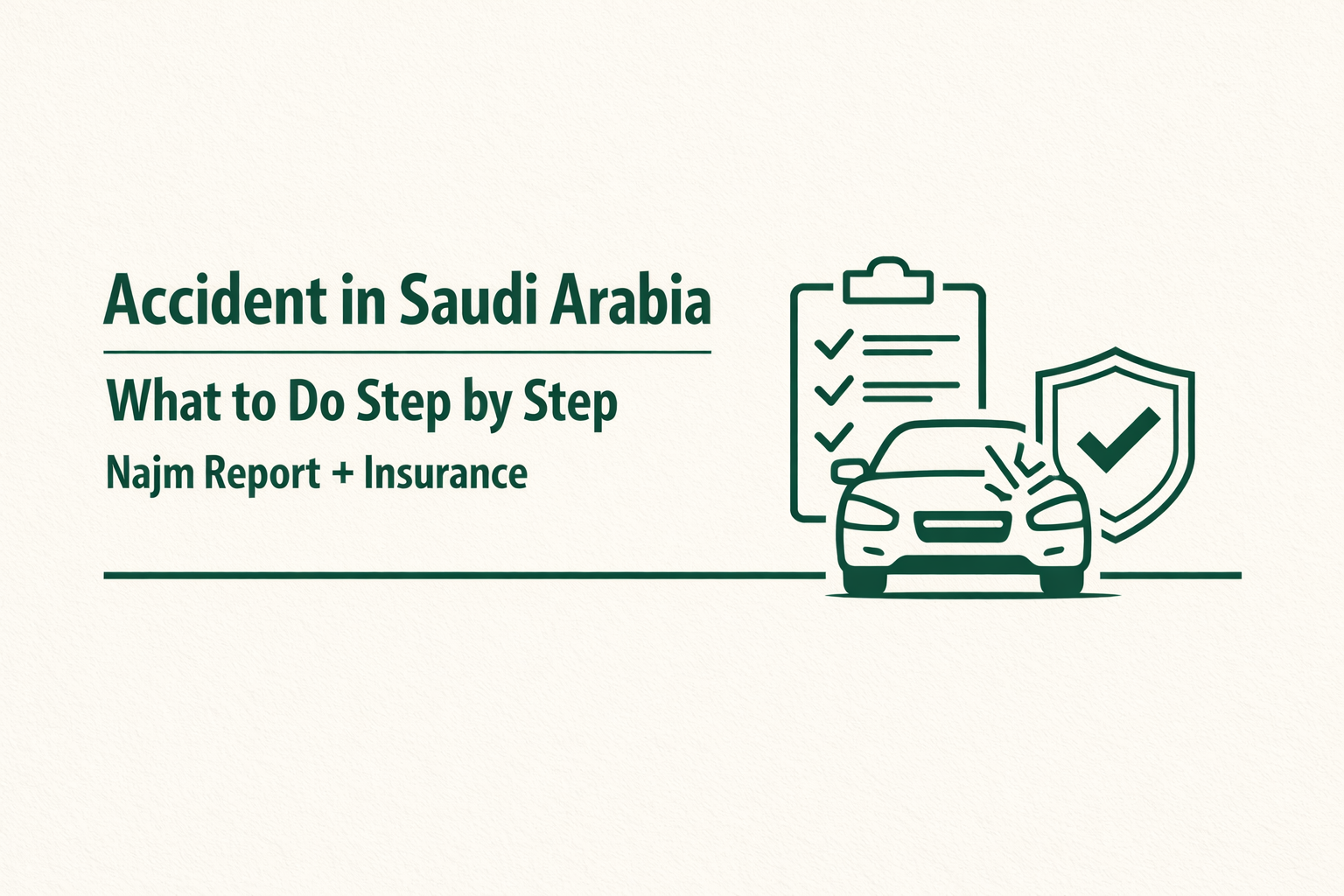
Car Accident in Saudi Arabia What to Do Step by Step
If you have a car accident in Saudi Arabia, it can feel confusing at first. The process is actually clear once you know the steps. What you do in the first few minutes matters for your report, your insurance claim, and how quickly things get resolved.
This guide walks you through what to do after a car accident in Saudi Arabia. You will learn when to call Najm, when Traffic Police are required, what information to collect, and how to move forward after the report. For a broader view of driving rules and ownership, see Driving in Saudi Arabia Complete Guide for Expats
What to do immediately after a car accident in Saudi Arabia
Start with safety and control the situation calmly.
First, check if anyone is injured. If there are injuries, do not treat this as a minor case. Call emergency services and wait for Traffic Police.
If the road is blocked and it is safe to move the vehicles, move them to the side. Turn on hazard lights and make sure everyone is out of danger.
Avoid arguing with the other driver and do not discuss fault at the scene. Focus on keeping things calm and organized.
Before anything changes, start documenting the situation with photos.
When to call Najm vs Traffic Police
Knowing who to call is important.
Use Najm for eligible minor accidents. These are cases where there are no injuries, the situation is safe, and at least one vehicle has valid insurance. Both drivers should be present.
For a full explanation, see Najm in KSA Explained When to Call and What Happens Next.
Call Traffic Police instead if the situation is more serious. This includes injuries, fire, dangerous road conditions, or if one driver does not have insurance. You should also call them if there is a hit and run or a major dispute.
If you are unsure, choose the safer option and treat it as a serious case.
What information to exchange with the other driver
Before leaving the scene, collect the key details from the other driver.
You should have their full name, mobile number, and plate number. Also note the insurance company and vehicle registration details. If needed, confirm ID or Iqama information.
Keep this simple and professional. Do not argue about fault. Your goal is to make sure all information is correct so the report and insurance process can move smoothly.
What photos and evidence to collect at the scene
Clear photos make a big difference later.
Take wide shots that show both vehicles and their position on the road. Then take close photos of all damage. Make sure plate numbers are visible.
Capture the surroundings as well. This includes lane markings, traffic lights, road signs, and the general layout of the scene. If there are skid marks or debris, include them.
Try to tell the full story of what happened through your photos. This helps both the report and the insurance process.
Step by step checklist after a minor accident
If the accident is minor and safe, follow this order:
- First, make the area safe and move the vehicles if needed.
- Second, contact Najm or report the case through the correct channel.
- Third, exchange details with the other driver.
- Fourth, take clear photos of the vehicles and surroundings.
- Fifth, wait until the case is properly logged and you have a report reference.
- Sixth, save all details and keep them accessible for later.
How the Najm accident report works
For many accidents, the Najm report becomes the main document used by insurance companies.
The report records the details of the accident, including the vehicles involved and the outcome of the case. It is linked to official systems, which helps move the claim forward.
Once the report is issued, you will have a case number and the basic outcome of the report. This is what your insurer will ask for first.
Treat this step seriously. A clear report makes everything easier afterward.
What to do after you receive the accident report
Once you have the report, the next stage begins.
Save your report number and keep copies of all documents and photos. Contact your insurance company as soon as possible and ask what steps to follow.
Some insurers require you to use approved workshops or specific inspection centers. Do not start repairs until you understand their process.
If you need a full explanation of how insurance works, see Car Insurance in Saudi Arabia Full Guide for Expats.
It is also a good idea to confirm your policy is active. You can check this through How to Check Car Insurance Validity in Saudi Arabia.
What to do if the other driver has no insurance
If the other driver does not have insurance, do not try to settle the situation informally.
Report the accident properly and make sure all details are documented. Take extra care with photos and information.
In these cases, proper reporting becomes even more important. It protects you and helps avoid complications later.
Common mistakes that delay claims and repairs
Many delays come from simple mistakes.
Leaving before the case is recorded can create confusion. Taking only close up photos without showing the full scene can weaken your evidence.
Some drivers forget to save the report number, which slows everything down later. Others start repairs too early without checking with their insurer.
Relying on verbal agreements instead of official reporting can also cause problems. Another common issue is not checking if insurance is active.
Keeping things documented and following the process avoids most of these issues.
Final advice after a car accident
Stay calm, document everything, and follow the official process from start to finish.
A clear approach looks like this:
- make the scene safe
- check for injuries
- report the accident correctly
- exchange details
- collect photos and evidence
- save the report
- follow your insurer’s steps
Handling it this way keeps the process smooth and avoids unnecessary delays.